
Table of Contents
- Who Issues Kitchen Permits in Contra Costa County?
- Do You Need a Permit to Replace Kitchen Countertops?
- Does Cabinet Refacing Need a Permit?
- Kitchen Remodel Permit Contra Costa County Triggers: 7 Changes That Require One
- Quick Reference: Kitchen Projects and Permits
- The Catch Nobody Mentions: Exempt Work Still Has to Meet Code
- Who Pulls the Permit, You or Your Contractor?
- What Happens If You Skip a Required Permit?
- A Typical Scenario: Refacing Plus New Quartz in Lafayette
- When a Permit-Free Kitchen Update Makes Sense (and When It Does Not)
- FAQ
- Is cabinet refacing treated differently from replacing cabinets?
- Do I need a permit to add a kitchen island?
- Does a like-for-like kitchen remodel still need a permit?
- Why do inspectors focus so much on kitchen outlets?
- What affects the cost of a kitchen permit in Contra Costa County?
- What should I ask a contractor about permits before hiring?
- Planning Your Kitchen the Right Way
Direct Answer: In most cases, the kitchen remodel permit Contra Costa County homeowners need is triggered by plumbing, electrical, gas or wall changes, while countertop swaps and cabinet refacing are usually exempt finish work, though cities like Walnut Creek add their own rules.
Ask three neighbors whether a new quartz countertop needs a permit and you will probably get three different answers. Some people assume every kitchen project needs one. Others think anything inside the house is fair game. Both camps are partly wrong, and the confusion gets worse once terms like “refacing,” “like-for-like” and “cosmetic remodel” enter the conversation.
Kitchen remodel permit Contra Costa County questions usually come down to what is hidden behind the cabinets, not what sits on top of them. In this guide we cover three things: which agency actually handles your permit (it depends on your city), how countertops and refacing are treated under the California code, and the specific changes that turn a simple update into permitted work.
Planning a kitchen project and not sure which side of the line it falls on? Tell us what you want to change and we will walk through the permit question with you before any work starts.
Who Issues Kitchen Permits in Contra Costa County?
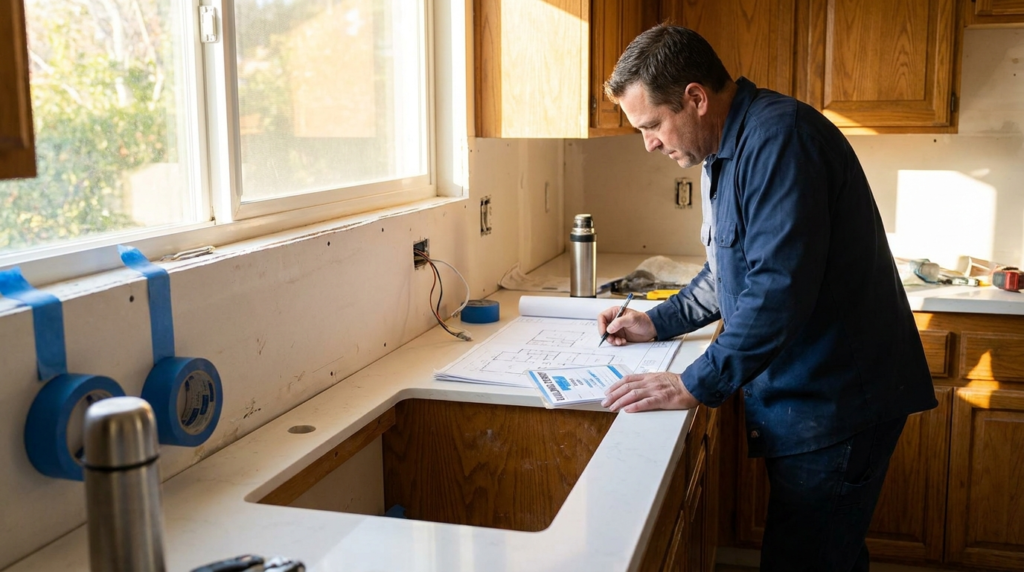
Your city decides, not the county as a whole. Contra Costa County has no single permit office for every address. That is the first thing to sort out before any kitchen remodel permit Contra Costa County application. Most incorporated cities run their own Building Division, while the County’s Building Inspection Division handles unincorporated areas plus a small group of contract cities.
Clayton, Hercules and Lafayette are among the cities that rely on the County for building permits and inspections. Clayton, for example, reviews zoning first at City Hall and requires contractors to hold a Clayton business license before the County will issue the permit. Walnut Creek, Concord and San Ramon, on the other hand, run their own building departments with their own portals and handouts.
That split matters for you. The kitchen remodel permit Contra Costa County homeowners need for a kitchen in Alamo or Kensington goes through the County. A kitchen near downtown Walnut Creek goes through the Walnut Creek Building Division, which now processes permits online and, since January 1, 2026, reviews them under the 2025 California building codes. Before you plan anything, confirm which office covers your address.
Do You Need a Permit to Replace Kitchen Countertops?
Usually not, as long as only the countertop changes. The California Residential Code, Section R105.2, lists “painting, papering, tiling, carpeting, cabinets, counter tops and similar finish work” as work exempt from a building permit, and Contra Costa cities adopt that state code. That is why a countertop swap is usually the easiest kitchen remodel permit Contra Costa County question to answer.
The word “only” carries a lot of weight here. Walnut Creek’s kitchen remodel bulletin, for instance, treats a countertop-only replacement with an unchanged layout as permit-free. If the sink is being replaced along with the countertop, though, the same bulletin calls for a Miscellaneous Permit.
So a new slab over the same cabinets, with the same sink dropped back into the same spot, typically stays exempt. A new undermount sink, a relocated cooktop or a fresh outlet in the backsplash can change the answer. Our countertop installation page explains how we plan sink, cooktop and backsplash work so the exempt part of the job stays exempt.
Does Cabinet Refacing Need a Permit?
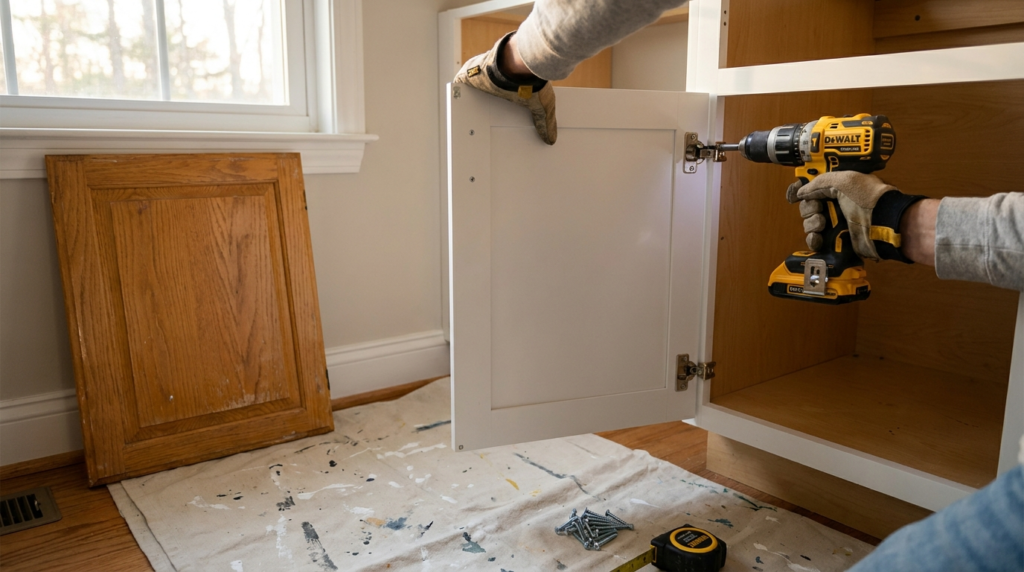
Cabinet refacing typically does not need a permit. Refacing replaces doors, drawer fronts and the visible veneer while the existing cabinet boxes stay screwed to the wall, so nothing behind them is disturbed.
Full cabinet replacement is a different story in some cities. Cabinets appear on the state exemption list, but Walnut Creek’s bulletin requires a building permit when upper or lower cabinets are removed and replaced. The reason is practical: once the boxes come out, the city wants the countertop outlets brought up to current spacing and GFCI/AFCI protection rules.
Refacing keeps your layout and wiring untouched. Replacement opens the wall and invites an inspector to look at everything behind it. If you like your current layout, our cabinet refacing guide breaks down what changes and what stays in place during a refacing project.
Kitchen Remodel Permit Contra Costa County Triggers: 7 Changes That Require One
Seven kinds of changes account for nearly every kitchen remodel permit Contra Costa County offices and cities issue. If your plan includes even one of them, expect to need a permit:
- Plumbing changes. Moving the sink, adding a prep sink, relocating the dishwasher supply or replacing concealed supply and drain pipes.
- New circuits or outlets. Adding countertop receptacles, running a dedicated circuit for a microwave or induction range, or moving outlet boxes. Simply reinstalling a receptacle in an existing box is a different matter from adding the box.
- Gas line work. New, relocated or repaired gas piping. Walnut Creek, for example, requires a pressure test at inspection when gas lines are installed, relocated or repaired.
- Wall removal or new openings. Opening the kitchen to the living room, widening a doorway or adding a window. Load-bearing walls need a framing plan, and sometimes an engineer.
- Lighting changes. New or replacement fixtures fall under California’s Title 24 energy rules, which require kitchen lighting to be high efficacy.
- Layout changes. Moving the range, refrigerator or sink to a new location, or adding an island with power or plumbing.
- Local cabinet rules. In cities like Walnut Creek, removing and replacing upper or lower cabinets on its own triggers a building permit.
Notice the pattern. Surfaces rarely trigger permits. Systems almost always do.
Quick Reference: Kitchen Projects and Permits
The table below summarizes how common kitchen projects are typically handled. Treat it as a starting point for any kitchen remodel permit Contra Costa County question, then confirm with the Building Division that covers your address, because local amendments can change the answer.
| Kitchen project | Permit typically needed? | What usually decides it |
|---|---|---|
| Countertop replacement, same layout | Usually no | Listed as exempt finish work under CRC R105.2 |
| Countertop plus new sink | Often yes | Walnut Creek requires a Miscellaneous Permit when the sink is replaced |
| Cabinet refacing | Usually no | Existing boxes, wiring and plumbing stay in place |
| Cabinet replacement | Depends on city | Exempt under state code, but Walnut Creek requires a building permit |
| Painting, tile backsplash, flooring | Usually no | Finish work, unless outlets or walls are altered |
| New outlets or circuits | Yes | Electrical work needs its own permit even when building work is exempt |
| Moving sink or gas range | Yes | Plumbing or gas piping is altered |
| Removing a wall | Yes | Structural change, framing review required |
The Catch Nobody Mentions: Exempt Work Still Has to Meet Code
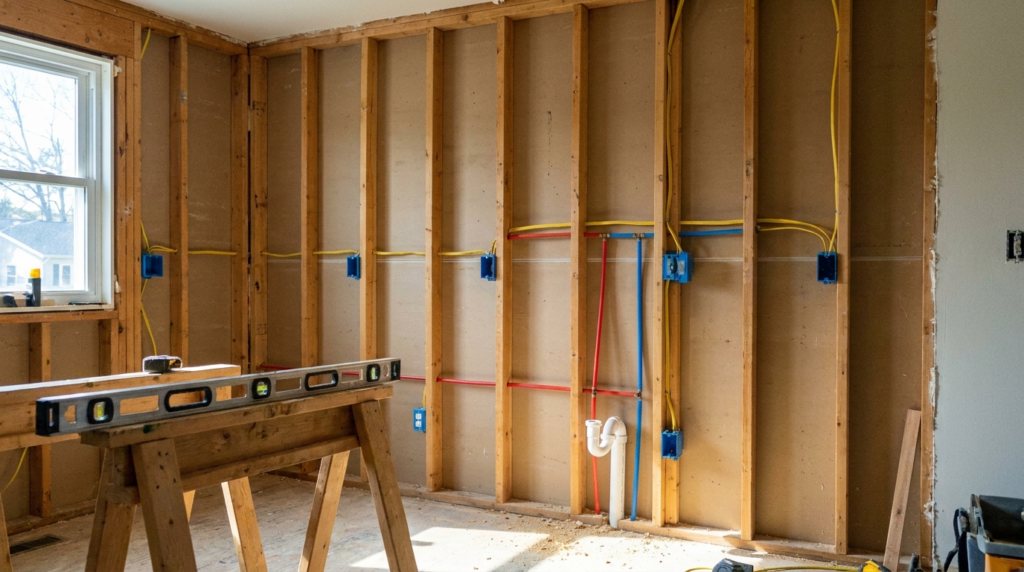
A permit exemption is not a code exemption. California’s permit rules state plainly that being exempt from a permit does not authorize work that violates the code, so a permit-free countertop job still has to meet electrical and plumbing requirements.
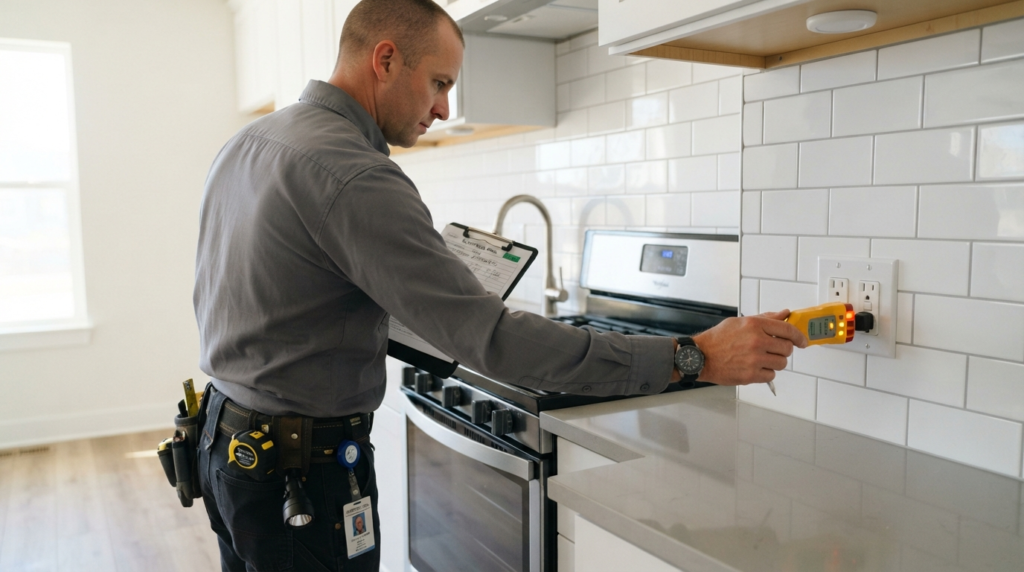
The technical reason is that countertops and cabinets touch other systems. A new countertop sits next to outlets that must be GFCI protected and spaced so no point along the counter is more than 24 inches from a receptacle. A taller backsplash can bury an outlet. A deeper sink can change how the drain connects. Inspectors who later see the kitchen, during a future permitted project or a sale, can flag those details.
Here is how you keep a permit-free update clean and outside kitchen remodel permit Contra Costa County requirements:
- Keep the sink, cooktop and appliances in their current locations.
- Reinstall outlets in their existing boxes instead of moving or adding boxes.
- Check that countertop outlets are GFCI protected before the new slab goes in.
- Avoid changing light fixtures unless you are ready for Title 24 rules.
- Photograph the before and after so you have a record of what changed.
Before you sign anything, ask your contractor one direct question: “Which part of this scope, if any, needs a permit in my city, and how do you know?” A good answer names the trigger. A vague answer is a warning sign.
Who Pulls the Permit, You or Your Contractor?
When a kitchen remodel permit Contra Costa County offices require is part of the job, your licensed contractor typically pulls it. California lets homeowners pull their own permits as owner-builders, but that makes you responsible for the work, the inspections and any corrections.
Adval Construction is licensed under CSLB #1059130, and our crews have completed more than 500 projects across the Bay Area. On permitted kitchens we usually handle the application, the drawings the city asks for and the inspection scheduling, so you are not chasing paperwork between appointments. We will not promise a specific approval date or fee, because those depend on the jurisdiction, the scope and the city’s workload at the time.
Want a second opinion on whether your plan needs a permit? Reach out to our team and describe the kitchen you have and the kitchen you want.
What Happens If You Skip a Required Permit?
Skipping a kitchen remodel permit Contra Costa County cities require can cost you far more effort later than it saves now. Cities can issue stop-work orders, require you to open finished walls so an inspector can see the wiring or plumbing, and charge investigation penalties on top of the normal permit.
The bigger risk often shows up years later. Unpermitted work can surface during a home sale, when a buyer’s inspector notices a new circuit or a relocated sink with no permit history. At that point you may face disclosure questions, renegotiation or retroactive permitting with drywall already painted. A finaled kitchen remodel permit Contra Costa County records can confirm, by contrast, leaves a clean history that follows the house.
A Typical Scenario: Refacing Plus New Quartz in Lafayette
The following is an illustrative example based on the kind of project we see often, not a specific client. Picture a homeowner in Lafayette with solid oak cabinets from the 1990s, a dated laminate countertop and a layout that already works well.
The first plan included a new sink in the island and two extra outlets. That version would have needed a kitchen remodel permit Contra Costa County issues for Lafayette, covering the electrical and plumbing work through its Building Inspection Division. After walking through the options, the homeowner chose to reface the cabinets, install quartz over the same footprint and drop a new faucet into the existing sink location.
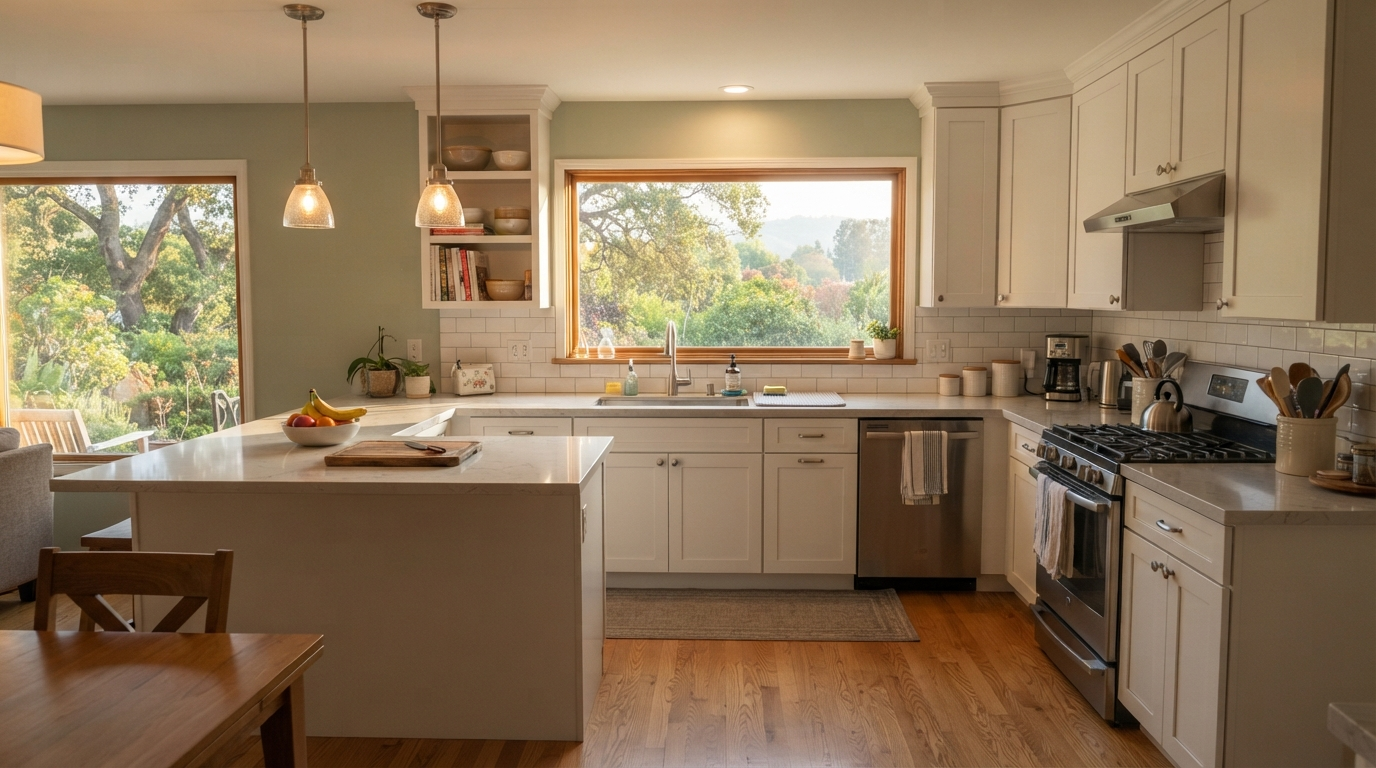
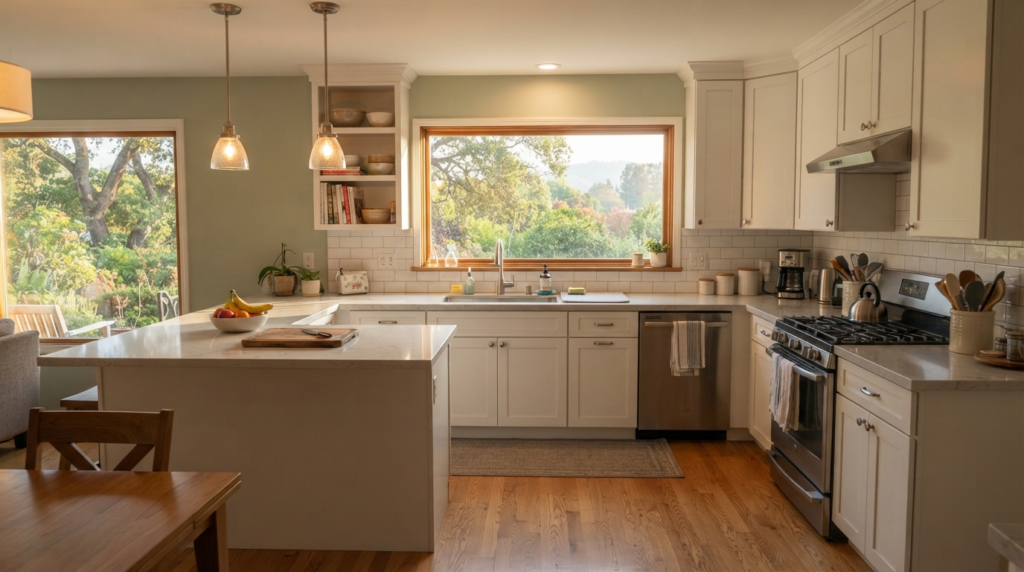
The result: a kitchen that looks new, keeps every pipe and wire where it was, and stays within exempt finish work. If the homeowner later decides to add that island sink, it becomes its own permitted phase, planned with the right drawings from day one.
When a Permit-Free Kitchen Update Makes Sense (and When It Does Not)
A permit-free update works best when your kitchen’s bones are good and only the surfaces feel tired, because it skips the kitchen remodel permit Contra Costa County process entirely. It fits situations like these:
- Solid cabinet boxes, dated style. Refacing and new countertops refresh the look without touching systems.
- A layout you already like. Same sink, same range, same refrigerator location.
- Selling soon. A cosmetic refresh in a Walnut Creek condo or a Concord ranch home can improve first impressions without a permit timeline.
It is not the best choice when:
- Your outlets are ungrounded or lack GFCI protection, because the new counter will highlight the problem.
- You want an island with a sink or cooktop.
- You plan to open a wall to the family room.
- Your cabinet boxes are water-damaged or sagging, which makes refacing a short-lived fix.
For full layout changes, our kitchen remodeling guide compares what a complete redesign involves against a lighter refresh.
FAQ
Is cabinet refacing treated differently from replacing cabinets?
Yes, in many Contra Costa cities cabinet refacing and cabinet replacement are treated differently. Refacing keeps the existing boxes, wiring and plumbing in place, so it typically falls under exempt finish work. Replacing cabinets is also exempt under the state code, but Walnut Creek requires a building permit when upper or lower cabinets are removed and replaced.
Do I need a permit to add a kitchen island?
A freestanding kitchen island with no power or water usually does not need a permit. An island with outlets, a cooktop or a sink typically does, because it requires new electrical circuits or plumbing lines. If you want power at the island, plan for a permitted electrical scope from the start.
Does a like-for-like kitchen remodel still need a permit?
A like-for-like kitchen remodel often still needs a kitchen remodel permit Contra Costa County inspectors will sign off on. The County’s weekly permit reports regularly list like-for-like kitchen remodels, because swapping sinks, outlets or fixtures in the same spots still involves electrical and plumbing work. The deciding factor is what gets disconnected, removed or replaced, not whether the layout looks the same afterward.
Why do inspectors focus so much on kitchen outlets?
Kitchen countertop outlets sit near water and high-wattage appliances, which makes them a common shock and overload risk. Older Contra Costa homes often have too few of them. California code requires GFCI protection for countertop receptacles and limits how far any point along the counter can be from an outlet. Once cabinets come out, many cities want those outlets brought up to current rules.
What affects the cost of a kitchen permit in Contra Costa County?
Fees for a kitchen remodel permit Contra Costa County issues depend mainly on the project’s declared valuation and on which trades are involved. Separate electrical, plumbing or mechanical permits add to the total, and plan review may be needed for structural changes. Your city or the County Building Inspection Division can tell you how fees are calculated for your address.
What should I ask a contractor about permits before hiring?
Before hiring a kitchen contractor, ask whether they hold an active CSLB license and who will pull the kitchen remodel permit Contra Costa County offices require. Ask which items in your scope trigger a permit in your specific city and how inspections will be scheduled. Finally, ask to see their license number in writing and verify it on the CSLB website.
Planning Your Kitchen the Right Way
Countertops and refacing usually stay permit-free. Plumbing, wiring, gas, walls and, in some cities, cabinet replacement usually do not. The fastest way to settle a kitchen remodel permit Contra Costa County question is to describe your project to someone who files these permits every month.
You can see what past clients say about working with us on our Yelp reviews and our Better Business Bureau profile. Our team works out of Pacheco and serves homeowners across the county, from Clayton to El Cerrito, through our Contra Costa County service area.
Ready to plan a kitchen that looks great and passes every inspection it needs? Call Adval Construction at (925) 278-8726 or send us your project details, and we will help you sort out the kitchen remodel permit Contra Costa County rules for your exact address before work begins.