
Table of Contents
- What’s the Difference Between a Walk-In Shower and a Bathtub?
- Walk-In Shower vs Bathtub: Side-by-Side Comparison
- Does a Walk-In Shower Add Value to a Bay Area Home?
- Why Buyers Still Look for a Bathtub
- The Trade-Off Nobody Mentions: Losing Your Only Tub
- Shower and Tub Options Worth Considering
- Where a Walk-In Shower Really Makes Sense (and Where It Doesn’t)
- Is a walk-in shower the same as a walk-in tub?
- Should I remove the only bathtub in a one-bathroom home?
- How much upkeep does a walk-in shower need compared to a bathtub?
- Why do walk-in showers sometimes develop leaks or mold?
- What affects the cost of converting a bathtub to a walk-in shower?
- What should I ask a contractor before choosing between the two?
- Final Thoughts
Direct Answer: In the walk-in shower vs bathtub decision, a walk-in shower adds everyday comfort and accessibility, while keeping at least one bathtub in the home protects resale appeal for families with young children and buyers who value a soaking tub.
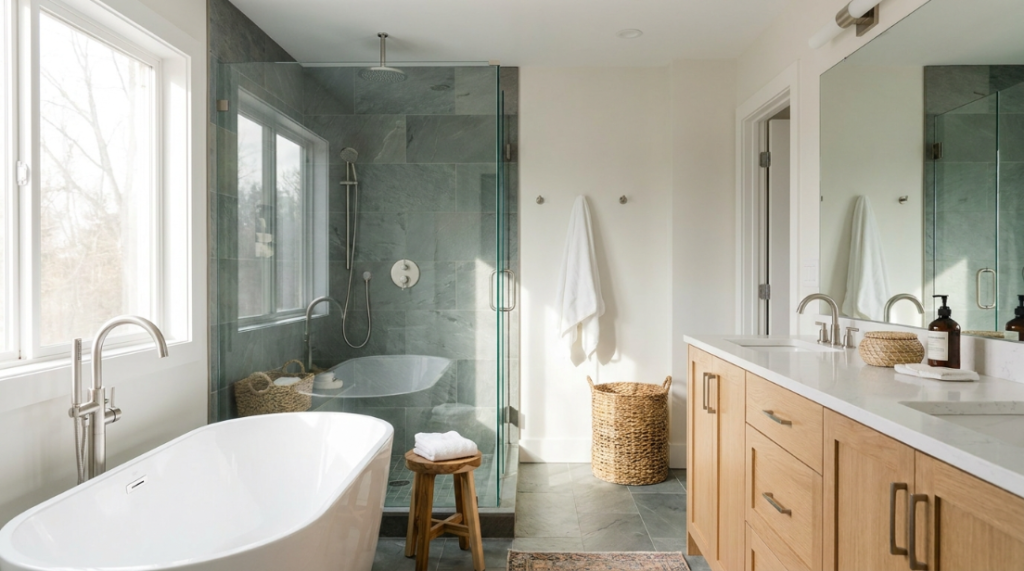
If you have started researching bathroom remodel ideas, there is a good chance you have run into the term “walk-in tub” too, and mixed it up with a walk-in shower. They are not the same fixture. A walk-in tub is a soaking tub with a sealed, hinged door, built mainly for seniors and people with limited mobility. A walk-in shower is an open, curbless or low-threshold shower stall meant for everyday use. Getting the two confused can send you comparing the wrong products.
This guide breaks down the walk-in shower vs bathtub question the way we actually hear it from homeowners across Contra Costa and Solano counties. You will learn what changes about your daily routine, what tends to matter most to buyers if you sell down the road, and how the number of bathrooms in your home changes the right call. We also cover a trade-off most articles skip entirely.
Adval Construction has handled bathroom remodels throughout the East Bay for years, and our crews see this same decision play out in nearly every consultation. We are licensed, bonded and insured under CSLB #1059130, with more than 500 completed projects across the Bay Area, so this comparison reflects what we see in real homes, not just general industry talk.
Not sure which direction fits your bathroom? Contact Adval Construction for a walkthrough before you commit to a layout.
What’s the Difference Between a Walk-In Shower and a Bathtub?
A walk-in shower is an open shower stall with a low or no threshold, while a bathtub is an enclosed basin built for soaking, and the walk-in shower vs bathtub choice usually comes down to daily use versus long-term flexibility. A walk-in shower typically has a glass enclosure, a slip-resistant floor and enough room to move without stepping over a tub wall. A bathtub can double as a shower with a curtain or sliding door, or stand alone as a soaking-only fixture.
A walk-in shower gets you in and out in under a minute. A bathtub asks you to slow down and soak. Neither answer is wrong, it just depends on what your household actually does every morning and evening, and getting that daily habit clear is the real starting point of any walk-in shower vs bathtub decision.
Walk-In Shower vs Bathtub: Side-by-Side Comparison
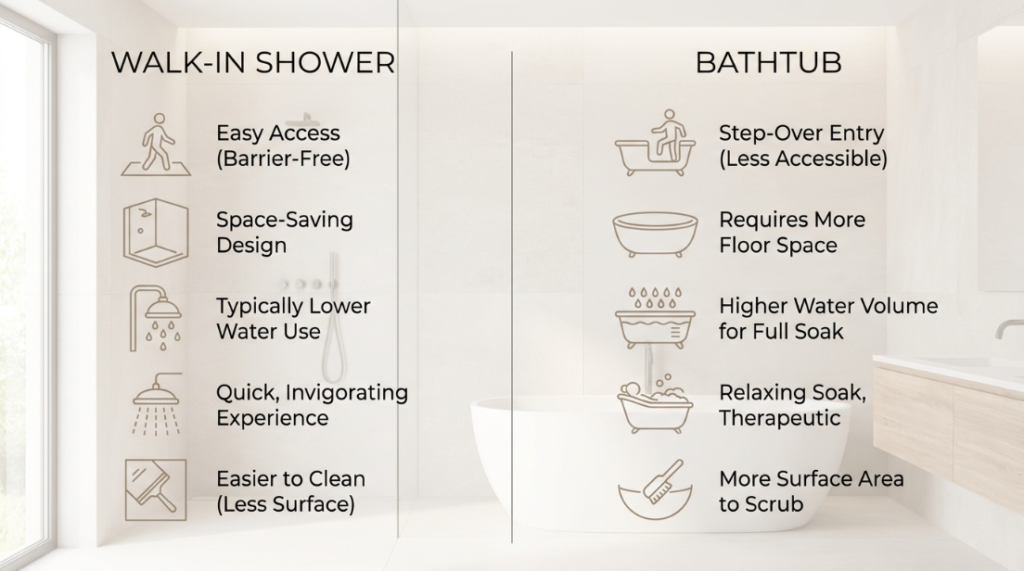
The walk-in shower vs bathtub table below lays out how the two options compare across the factors homeowners ask about most.
| Factor | Walk-In Shower | Bathtub |
|---|---|---|
| Space needed | Compact footprint, often starting around 36 by 36 inches | Longer footprint, usually 5 feet or more |
| Water use per use | Lower, especially with a low-flow showerhead | Higher, since the tub has to fill |
| Accessibility | Best option for curbless, no-step entry | Requires stepping over the tub wall |
| Daily maintenance | Glass and grout need regular cleaning | Caulk line needs periodic attention |
| Best for | Primary suites, aging in place, smaller households | Families with young kids, pets, or anyone who soaks |
| Buyer appeal | Reads as modern and move-in ready | Broadens appeal to family buyers |
Does a Walk-In Shower Add Value to a Bay Area Home?
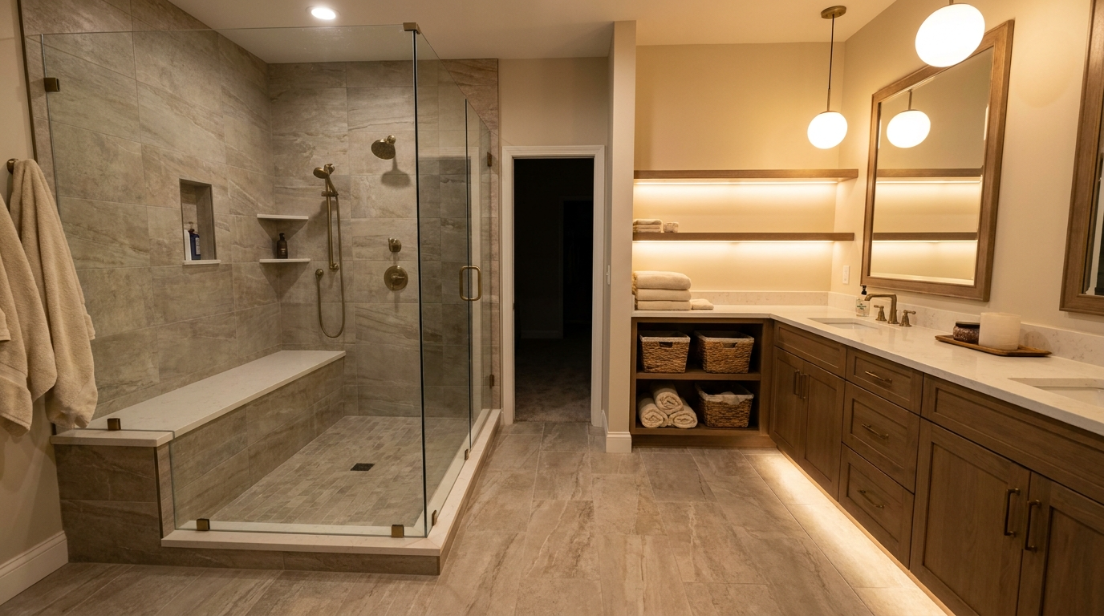
Yes, a well-built walk-in shower adds real value to your Bay Area home, mainly by making the primary bathroom feel larger, safer and more current. Frameless glass, a curbless entry and large-format wall panels read as an upgrade the moment a buyer walks in, and that first impression matters just as much in a primary suite as it does in the kitchen.
We recently opened up a primary bathroom in Walnut Creek by swapping a dated tub-shower combo for a curbless glass shower, and the homeowners told us the room finally matched the rest of their updated home. That kind of change is common across the properties we work on: removing a bulky tub enclosure and replacing it with an open shower area makes the whole bathroom read bigger, even without moving a single wall.
Clients who leave us feedback on Google and Yelp often mention how much bigger a bathroom feels once we open up the shower area, which lines up with what we hear from real estate agents about buyer walkthroughs too. When the walk-in shower vs bathtub question comes up specifically for a primary suite, the shower is usually the stronger pick for everyday buyer appeal.
Curious what a walk-in shower could look like in your own bathroom? Browse real remodels in our project gallery for ideas before your consultation.
Why Buyers Still Look for a Bathtub
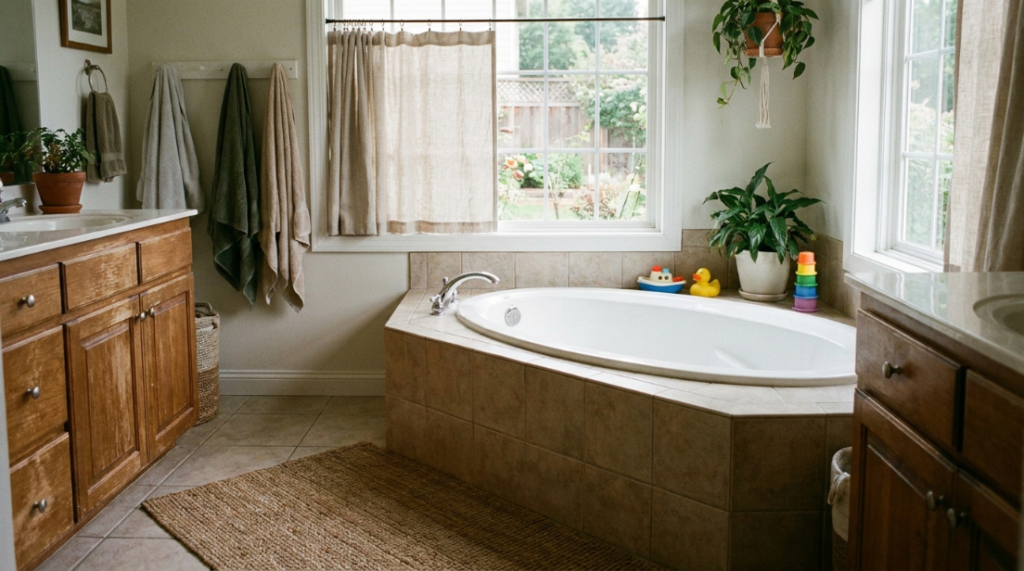
If you have young children, or you simply enjoy a soak, you probably already treat a bathtub as a must-have somewhere in your home. Bathing a toddler or a dog in a walk-in shower is possible, but it is far more awkward than lifting them into a tub. That single practical detail keeps bathtubs relevant even as walk-in showers dominate design trends.
If your home has more than one full bathroom, this is rarely an either-or decision. Many of the homeowners we work with in Concord and Martinez keep a bathtub in a secondary or hall bathroom while converting the primary suite to a walk-in shower. That approach covers both preferences without asking anyone to give up their soaking tub, and it is often how the walk-in shower vs bathtub debate gets settled in real households.
The Trade-Off Nobody Mentions: Losing Your Only Tub
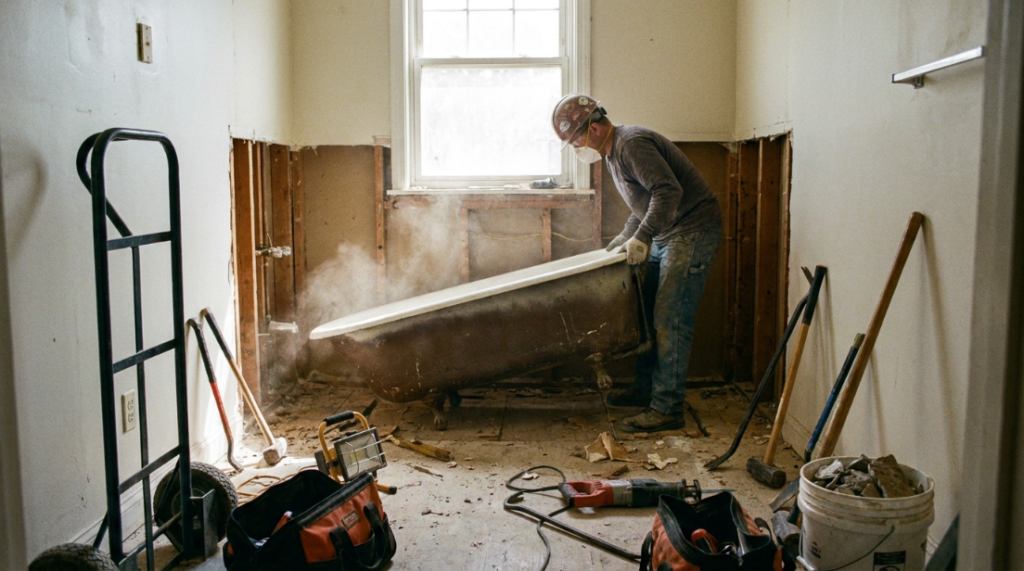
Removing the only bathtub in your home is the one decision in this walk-in shower vs bathtub debate that can actually shrink your pool of future buyers. Families shopping for a home with small kids or pets often filter listings specifically for at least one tub, and if your home has a single full bathroom that becomes shower-only, it can quietly rule you out for that segment of buyers when the home eventually goes on the market.
The technical reason is simple: a bathtub is far harder to add back in later than it is to remove, since it usually means rerouting plumbing and reworking the surrounding walls and floor. A few ways to reduce that risk:
- Keep a bathtub in a secondary bathroom if your home has more than one
- Look at a shorter, deeper soaking tub next to a curbless shower if the layout allows it
- Choose a tub-to-shower conversion that leaves the plumbing rough-in intact, so a future owner could reverse the change
- Ask your contractor to document the change clearly, especially in a neighborhood popular with growing families
Before you commit, ask your contractor one direct question: if this home ever goes back on the market, what does removing this tub do to the pool of buyers who will consider it?
Shower and Tub Options Worth Considering
Not every walk-in shower or bathtub looks the same, and the version you choose changes how well it fits your bathroom. The walk-in shower vs bathtub decision often comes down to picking the right variant, not just the right category.
- Curbless walk-in shower: best for aging in place and no-step accessibility. Common mistake: skipping a proper floor slope, which leads to water pooling near the entrance instead of draining.
- Framed or frameless glass enclosure: best for primary suites where you want an open sightline. Common mistake: choosing frameless glass in a small bathroom, since the larger glass panels can be harder to keep spot-free than expected.
- Compact soaking tub: best for fitting a tub into a smaller footprint alongside a shower. Common mistake: picking a tub that is too shallow to comfortably soak in.
- Tub-to-shower conversion insert: best for a faster remodel timeline with less demolition. Common mistake: assuming every insert fits every existing tub alcove without measuring first.
If you are ready to move forward, our bathroom remodeling services cover everything from a simple tub-to-shower conversion to a full custom rebuild.
Where a Walk-In Shower Really Makes Sense (and Where It Doesn’t)
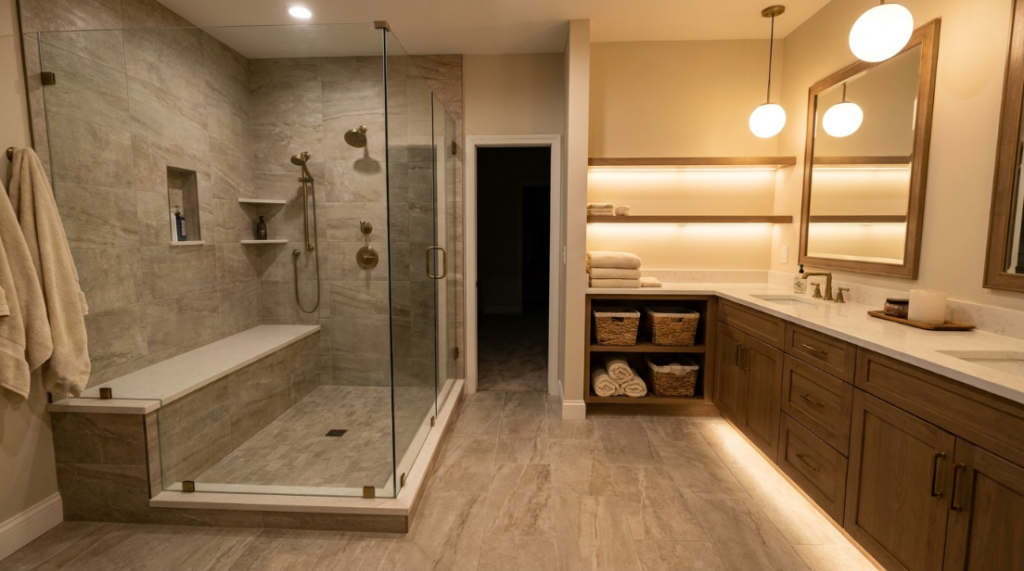
A walk-in shower makes the most sense when your home already has a bathtub somewhere else, or when you are remodeling a primary suite that is not the only full bathroom in the house. It works especially well in these situations:
- Multi-bathroom homes in Concord or Danville, where the primary suite goes shower-only while a hall bath keeps a tub
- Aging-in-place remodels, where a curbless entry removes a real fall risk
- Smaller households without young children who rarely use a bathtub at all
The walk-in shower vs bathtub trade-off tips toward the shower in these scenarios because there is already a soaking option elsewhere in the home. It is not the best choice in every case, though. Think twice before removing your only tub if:
- Your home has a single full bathroom and you plan to sell within the next few years
- You are in a neighborhood that tends to attract move-up buyers with kids
- Removing the tub would leave zero soaking option anywhere on the property
Frequently Asked Questions
Is a walk-in shower the same as a walk-in tub?
No. A walk-in shower is an open stall for daily use, while a walk-in tub is a sealed soaking tub built mainly for seniors. This walk-in shower vs bathtub guide covers the open shower versus a standard tub, not the accessibility product. Mixing up the two terms often means comparing the wrong fixtures.
Should I remove the only bathtub in a one-bathroom home?
Usually not, especially if you plan to sell soon, since buyers with kids or pets often want at least one tub. A compact soaking tub next to a shower is often a better middle ground than removing it. This is the clearest walk-in shower vs bathtub case where the tub tends to win.
How much upkeep does a walk-in shower need compared to a bathtub?
A walk-in shower needs more routine care, since grout, glass panels and the drain all need regular cleaning. A bathtub needs less day-to-day upkeep, though its caulk line wears down over time. Large-format wall panels cut down on grout lines and reduce that ongoing work.
Why do walk-in showers sometimes develop leaks or mold?
Most leaks trace back to incorrect floor slope, gaps in waterproofing, or old caulk that was never replaced. Mold follows the same pattern, showing up wherever moisture sits instead of draining. Ask your contractor how they waterproof and slope the pan, not just which tile you are choosing.
What affects the cost of converting a bathtub to a walk-in shower?
The main factors are your existing plumbing, whether the drain needs to move, the enclosure type, and how much wall work is needed. Older homes across Contra Costa and Solano counties often need extra plumbing work to meet current code. Your contractor can walk you through which factors apply to your bathroom.
What should I ask a contractor before choosing between the two?
Ask how the change affects resale appeal if your home has only one full bathroom. Ask how they waterproof behind the walls and whether the plumbing rough-in needs to move. Ask to see examples of similar remodels they have completed nearby.
Final Thoughts
There is no single right answer to the walk-in shower vs bathtub question. It depends on how many bathrooms you have, who is likely to use your home next, and whether you are remodeling for yourself or for resale. If you want a second opinion on your specific layout, Adval Construction can walk your bathroom with you and lay out what actually makes sense for your home, not just what is trending this year.
You can also see verified bathroom remodeling feedback on our Thumbtack profile before reaching out.
Contact Adval Construction to schedule a consultation and see real walk-in shower and bathtub remodels we have completed across the Bay Area.