
Are you remodeling a home in the Bay Area and stuck deciding between luxury vinyl plank, tile, or hardwood flooring? You are not alone.
Choosing the right floor is one of the most impactful decisions you will make during a renovation. It affects your home’s comfort, durability, and resale value for decades.
Understanding LVP vs tile vs hardwood flooring Bay Area homes 2026 is essential before committing thousands of dollars to any single material.
In this guide, you will learn how each option performs across cost, water resistance, longevity, and return on investment, specifically tailored for the Bay Area’s unique climate and housing market.
Whether you own a mid-century ranch in Walnut Creek or a modern build in Fairfield, the information below will help you invest with confidence. Keep reading to discover which flooring gives your home the best combination of beauty, function, and long-term value.
Ready to upgrade your floors? Contact Adval Construction Inc. today for a free estimate on professional flooring installation anywhere in Solano County and Contra Costa County.
What Are the Three Most Popular Flooring Types for Bay Area Homes?
Before diving into side-by-side comparisons, it is important to understand what makes each material unique and why it has earned its place in Bay Area homes.
Luxury Vinyl Plank (LVP)
Luxury vinyl plank is a synthetic flooring material made of multiple layers. These include a rigid core (SPC or WPC), a photographic design layer that mimics natural wood or stone, and a protective wear layer on top.
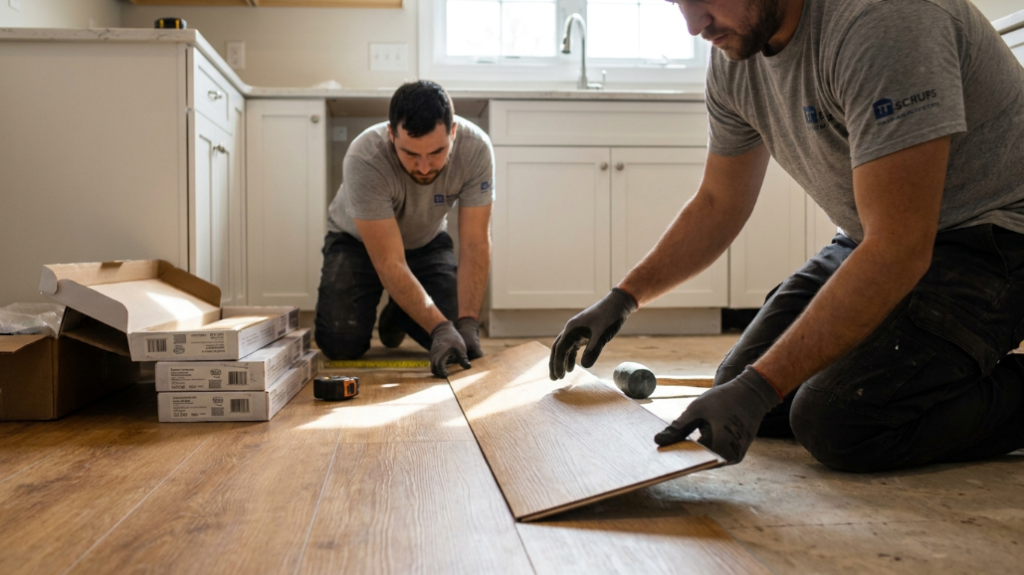
LVP uses a click-lock floating installation system, meaning it does not need to be glued or nailed to the subfloor. This makes it one of the fastest flooring options to install.
It is particularly well-suited for homes built on concrete slabs or older foundations common throughout the Bay Area. LVP is fully waterproof, scratch-resistant, and available at a fraction of the cost of real hardwood.
When comparing LVP vs tile vs hardwood flooring Bay Area homes 2026, luxury vinyl plank stands out as the most budget-friendly waterproof option available.
Ceramic and Porcelain Tile
Tile flooring has been a staple in California homes for generations. Ceramic tile is made from kiln-fired clay and is suitable for low-traffic, dry areas.
Porcelain tile is denser, harder, and absorbs less water, making it the preferred choice for kitchens, bathrooms, and entryways. Porcelain now accounts for over 55 percent of residential tile installations nationally.
Tile offers unmatched design versatility, from large-format slabs to intricate mosaic patterns. When properly installed, it can last 25 to 50 years or more.
In any evaluation of LVP vs tile vs hardwood flooring Bay Area homes 2026, porcelain tile earns top marks for longevity and moisture management.
Solid and Engineered Hardwood
Hardwood flooring remains the gold standard for home interiors. Solid hardwood is milled from a single piece of timber and can be sanded and refinished eight to ten times over a lifespan of 50 to 100 years.
Engineered hardwood features a real wood veneer bonded to a plywood core, offering improved dimensional stability in climates with temperature fluctuations.
For Bay Area homeowners, hardwood consistently delivers the highest perceived value among buyers and appraisers. That is why LVP vs tile vs hardwood flooring Bay Area homes 2026 discussions consistently position hardwood as the aspirational benchmark.
Why Does Your Flooring Choice Matter So Much in the Bay Area?
The Bay Area presents specific conditions that make flooring selection more consequential than in many other regions.
Climate Considerations
The Bay Area’s Mediterranean climate brings mild, wet winters and dry summers. Microclimates vary dramatically: foggy and cool in San Francisco, warmer and drier inland through Concord, Martinez, and Fairfield.
This temperature range causes materials to expand and contract. Hardwood is more susceptible to these shifts unless engineered options are chosen.
LVP’s rigid core construction handles fluctuation with minimal movement. Tile remains dimensionally stable in all conditions but feels cold underfoot during winter months.
Climate is a core factor in every LVP vs tile vs hardwood flooring Bay Area homes 2026 decision.
Seismic Activity
Living in an active seismic zone means your floors need to tolerate foundation movement. LVP’s floating installation provides natural flexibility during minor tremors.
Tile, when installed on a properly prepared substrate with flexible adhesive, performs well but is more prone to cracking under significant shifts. Hardwood nailed to a subfloor generally handles seismic stress effectively, though older installations may develop squeaks over time.
Seismic resilience should weigh heavily in your LVP vs tile vs hardwood flooring Bay Area homes 2026 analysis.
Real Estate Market Pressures
In a region where median home prices routinely exceed one million dollars, flooring quality directly influences buyer perception and appraisal outcomes.
Hardwood floors are among the top features buyers seek, and homes with hardwood sell faster and at higher prices. LVP is increasingly accepted in the market, but some buyers still perceive it as a less premium alternative.
Tile, particularly porcelain, carries strong resale value in kitchens and bathrooms. These market dynamics make understanding LVP vs tile vs hardwood flooring Bay Area homes 2026 a financial priority, not just an aesthetic one.
LVP vs Tile vs Hardwood Flooring Bay Area Homes 2026: Full Cost Comparison
Cost is one of the primary drivers behind any flooring decision. Here is what Bay Area homeowners can expect to pay in 2026, including materials and professional installation.
| Factor | LVP | Ceramic/Porcelain Tile | Hardwood (Solid/Engineered) |
|---|---|---|---|
| Material Cost (per sq ft) | $2 – $10 | $2 – $35 | $6 – $12 |
| Installation Labor (per sq ft) | $2 – $4 | $5 – $15 | $3 – $8 |
| Total Installed Cost (per sq ft) | $4 – $14 | $12 – $50 | $8 – $20+ |
| 1,500 sq ft Whole-Home Estimate | $6,000 – $21,000 | $18,000 – $75,000 | $12,000 – $30,000+ |
| Average Lifespan | 15 – 25 years | 25 – 50 years | 50 – 100 years |
| Refinishable | No | No | Yes (8–10 times) |
| DIY Friendly | Yes (click-lock) | Difficult | No (requires professional) |
Bay Area labor rates tend to run 10 to 20 percent above national averages due to higher cost of living and seismic code requirements.
Summer installations often cost 10 to 15 percent more than winter projects. Scheduling your renovation between November and February can yield meaningful savings.
At Adval Construction Inc., we provide transparent pricing for every flooring project across our service locations in Solano County and Contra Costa County. Our team walks you through material options, labor estimates, and timelines before any work begins.
How Does Each Flooring Type Perform in Bay Area Kitchens and Bathrooms?
Kitchens and bathrooms are the rooms where flooring performance is tested most aggressively. These spaces endure moisture, spills, heavy foot traffic, and temperature changes daily.
LVP in Wet Areas
LVP with a rigid SPC core is fully waterproof and handles standing water without warping or damage. It is warm and comfortable underfoot, quiet when walked on, and does not require grout maintenance.
For families with young children or pets, LVP delivers practical performance that is hard to beat in kitchens and bathrooms.
One limitation: if water penetrates seams or edges and reaches the subfloor, damage can occur underneath since floating floors are not sealed to the substrate.
For wet-area performance in the LVP vs tile vs hardwood flooring Bay Area homes 2026 comparison, LVP ranks as the most practical all-around solution.
Tile in Wet Areas
Porcelain tile with properly sealed grout is the traditional choice for wet rooms and remains an excellent performer. It handles standing water, heat, and heavy impacts without concern.
The downside is comfort. Tile is hard and cold underfoot, which matters during the Bay Area’s cooler months.
Grout lines require periodic resealing to prevent moisture intrusion and mold growth, adding to long-term maintenance requirements.
Tile remains a top contender in any LVP vs tile vs hardwood flooring Bay Area homes 2026 assessment of bathroom and kitchen durability.
Hardwood in Wet Areas
Solid hardwood is generally not recommended for bathrooms or areas with frequent water exposure. Engineered hardwood with a factory-applied finish performs better but still requires immediate cleanup of spills.
It is not suitable for rooms with high humidity or standing water risk. Many Bay Area homeowners use hardwood in living spaces and transition to LVP or tile in wet rooms.
This balanced, practical approach is one of the smartest strategies when navigating LVP vs tile vs hardwood flooring Bay Area homes 2026.
Which Flooring Adds the Most Resale Value to Bay Area Homes?
If you are planning to sell within the next five to ten years, your flooring choice becomes a strategic investment, not just an aesthetic preference.
Solid hardwood consistently delivers the highest return on investment of any flooring type. Buyers perceive it as a premium, permanent upgrade that does not require replacement.
In the Bay Area’s competitive market, homes with hardwood throughout the main level command higher offers and move faster.
LVP has gained considerable ground. Well-installed, premium LVP contributes positively to home value, particularly in homes priced under the luxury threshold. However, in homes valued above one million dollars, some buyers still expect real hardwood.
Tile holds strong resale value specifically in kitchens and bathrooms, where its durability and water resistance are expected. Cracked, dated, or poorly grouted tile can hurt a listing, so condition matters as much as material choice.
The 2026 trend among Bay Area real estate agents is consistent: buyers want warm tones, matte finishes, wide planks, and cohesive flooring flowing throughout the main living level.
Every homeowner weighing LVP vs tile vs hardwood flooring Bay Area homes 2026 should factor resale expectations into their final choice.
Common Mistakes to Avoid When Choosing Flooring in the Bay Area
Even experienced homeowners make errors that cost time and money. Here are the most frequent mistakes related to LVP vs tile vs hardwood flooring Bay Area homes 2026 projects.
Choosing Based on Price Alone
The cheapest LVP at two dollars per square foot looks and feels cheap. Budget porcelain with improper installation cracks within years.
Investing in mid-range to premium materials paired with professional installation consistently produces better results and higher long-term value. The gap between a two-dollar and a five-dollar LVP product is enormous in both appearance and durability.
This is one of the most expensive mistakes in the LVP vs tile vs hardwood flooring Bay Area homes 2026 decision process.
Ignoring Subfloor Preparation
Subfloor condition is the foundation of every successful flooring installation. For tile, an uneven subfloor causes lippage and cracking.
For LVP, deep grout lines from previous tile must be leveled. For hardwood, moisture testing is essential, especially on concrete slabs common in Bay Area construction.
Skipping preparation is the single most common reason flooring installations fail prematurely. Proper subfloor work is non-negotiable in any LVP vs tile vs hardwood flooring Bay Area homes 2026 installation.
Mixing Too Many Materials
Buyers and appraisers in 2026 prefer a cohesive flow of flooring throughout the main level rather than different materials in every room.
One hard-surface floor running from the entry through the kitchen, living, and dining areas creates a seamless feel that photographs well and makes spaces look larger. Limit transitions to logical points, such as the threshold between a living area and a bathroom.
Overlooking Bay Area Seismic Codes
Local building codes often require specific installation techniques, including flexible adhesives, additional underlayment, or particular fastening methods.
These requirements can increase costs by 5 to 15 percent but protect your investment against the region’s seismic reality.
Always work with a contractor who understands local codes, like Adval Construction Inc., which has extensive experience throughout Contra Costa County and Solano County.
Selecting the Wrong Finish
The cool gray flooring trend that dominated the late 2010s is firmly behind us. Buyers in 2026 want warm tones such as honey oak, natural walnut, and warm greige.
Matte and satin finishes look more modern and natural than high-gloss options, which show every scratch and footprint. Choose finishes that align with current buyer preferences to maximize resale appeal.
Step-by-Step Guide: How to Choose the Right Floor for Your Bay Area Home
Selecting the best flooring is a systematic process. Follow these steps to make a decision aligned with your budget, lifestyle, and goals.
Step 1: Define Your Budget. Calculate total square footage and determine your comfortable spend per square foot. Include materials, labor, subfloor prep, and demolition of existing flooring. Remember that Bay Area labor rates run above the national average.
Step 2: Assess Each Room’s Needs. Kitchens and bathrooms need waterproof options (LVP or tile). Living areas and bedrooms can accommodate hardwood or premium LVP. Basements and mudrooms benefit from LVP’s moisture resistance.
Step 3: Consider Your Timeline. LVP click-lock installation is fast. A professional crew can complete 500 square feet in a single day. Tile requires multi-day processes including thin-set application, curing, grouting, and sealing. Hardwood installation falls in between.
Step 4: Evaluate Your Long-Term Plans. If you plan to stay in your home for 20 or more years, hardwood’s ability to be refinished multiple times offers unmatched longevity. If you plan to sell within five to ten years, choose the material that maximizes buyer appeal for your price range. Your timeline directly shapes which option wins in the LVP vs tile vs hardwood flooring Bay Area homes 2026 equation.
Step 5: Request Professional Estimates. Get at least three quotes from licensed, insured contractors with Bay Area experience. Verify they understand local seismic requirements and have strong reviews.
Check Adval Construction’s reviews from homeowners across the region, or see independent feedback on Google Maps, Yelp, Angi, and the BBB.
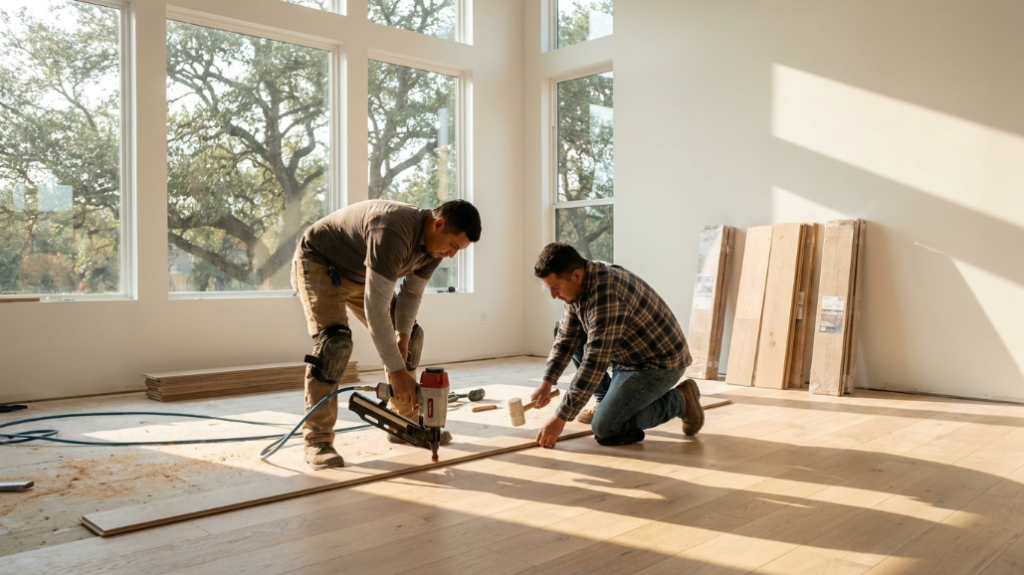
Real Bay Area Case Studies: How Homeowners Made Their Choice
Case Study 1: Whole-Home LVP in Vacaville
A family of four with two large dogs needed durable, waterproof flooring throughout their 1,800-square-foot Vacaville home.
They chose a premium SPC-core LVP with a 20-mil wear layer in a warm oak tone. Total project cost came in at approximately $14,400 installed.
The installation was completed in three days with minimal disruption. Two years later, the floors show no visible scratches or wear despite heavy daily use.
The homeowners noted that choosing a single material flowing throughout the home made every room feel larger and more cohesive. Their experience illustrates how LVP vs tile vs hardwood flooring Bay Area homes 2026 decisions play out in real family life.
Adval Construction Inc. served this project through their Vacaville kitchen remodeling and bathroom remodeling services, handling the complete flooring scope as part of a broader renovation.
Case Study 2: Hardwood with Tile Accents in Walnut Creek
A couple preparing to sell their Walnut Creek home invested in engineered white oak hardwood for the main level living areas and large-format porcelain tile for the kitchen and bathrooms.
The combined project cost approximately $28,000 for 1,200 square feet. Their real estate agent reported the updated flooring contributed to a sale price that exceeded comparable listings by over four percent.
The buyers specifically cited the hardwood floors as a deciding factor. This type of strategic combination is exactly what the team at Adval Construction recommends for homeowners in Walnut Creek who want to maximize return on their renovation investment.
Case Study 3: Porcelain Tile Throughout in Fairfield
An investor renovating a rental property in Fairfield chose porcelain wood-look tile throughout the entire home to eliminate future maintenance concerns.
The tile delivered the aesthetic of hardwood with zero risk of water damage or pet scratches. Total cost for 1,400 square feet was approximately $25,000 installed.
The property rented within two weeks of listing at a premium rate, and the flooring is projected to last 25 to 40 years without replacement. This project demonstrates the investment-grade side of the LVP vs tile vs hardwood flooring Bay Area homes 2026 debate.
See the Adval Construction gallery for examples of similar projects in Fairfield.
Recommended Tools and Resources for Bay Area Flooring Projects
Selecting the right tools and resources simplifies your decision-making process and helps you avoid costly mistakes.
For measuring and estimating, use a laser distance measurer for accurate square footage calculations. Online calculators from HomeGuide and HomeWyse provide quick cost estimates, though Bay Area prices will trend 10 to 20 percent higher than national averages shown.
For comparing materials, visit local flooring showrooms to see and feel samples in person. Order samples from multiple manufacturers and view them in your home under natural lighting at different times of day. Colors shift dramatically between showroom fluorescent light and your living room.
For finding contractors, platforms like HomeAdvisor, Thumbtack, and Trustindex provide verified reviews and project history for local contractors.
Always verify licensing, insurance, and experience with Bay Area building codes.
For design inspiration, browse the Adval Construction Instagram and Facebook page for real project photos from homes in Concord, Martinez, Vacaville, and Fairfield.
LVP vs Tile vs Hardwood: Which Is Best for Each Room?
Not every room in your home demands the same flooring. Here is a room-by-room recommendation based on Bay Area conditions and the latest LVP vs tile vs hardwood flooring Bay Area homes 2026 data.
| Room | Best Choice | Why |
|---|---|---|
| Living Room | Hardwood or Premium LVP | Warm tones, wide planks, maximum visual impact |
| Kitchen | LVP or Porcelain Tile | Waterproof, easy to clean, handles spills |
| Bathroom | Porcelain Tile or LVP | Full moisture protection required |
| Bedroom | Hardwood or LVP | Comfort and warmth underfoot |
| Entryway | Porcelain Tile | Handles dirt, moisture, and heavy traffic |
| Basement | LVP | Waterproof core handles slab moisture |
| Mudroom | LVP or Tile | Durable, easy-clean surfaces |
Many Bay Area homeowners achieve the best results by combining two materials. Hardwood or premium LVP for living spaces paired with porcelain tile for wet areas and entryways.
This hybrid approach, when executed with clean transitions, satisfies both practical needs and buyer preferences.
Planning a flooring renovation in Solano County or Contra Costa County? Adval Construction Inc. specializes in flooring installation, kitchen remodeling, and bathroom remodeling with expert guidance on material selection. Get your free estimate today.
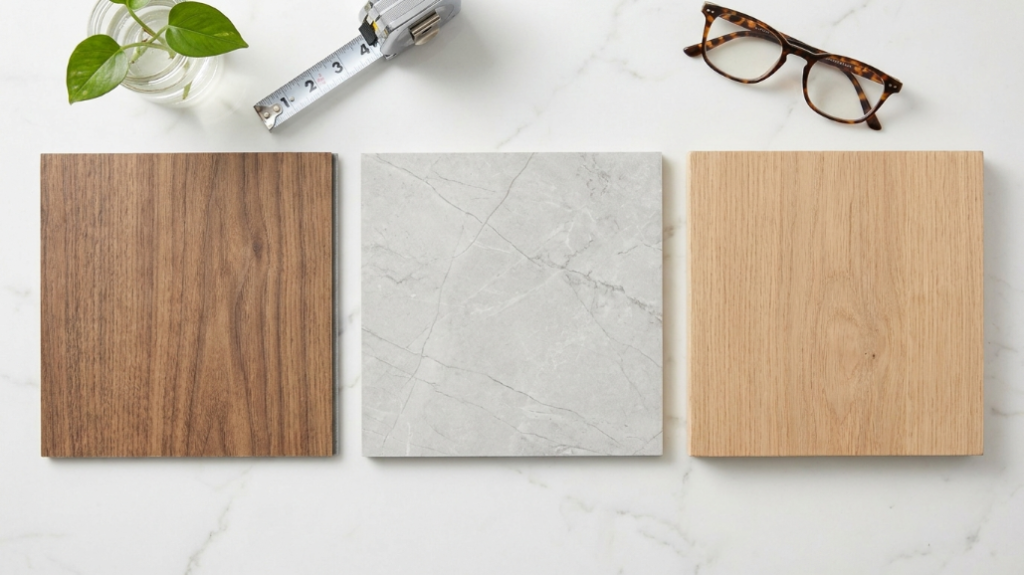
2026 Bay Area Flooring Trends You Should Know
The flooring trends shaping Bay Area homes in 2026 reflect broader shifts in design preferences and homeowner values.
Warm tones are dominant. Honey oak, natural walnut, and warm greige have replaced the cool gray palettes that dominated previous years. These tones create inviting spaces and pair well with nearly every interior design style.
Wide planks continue to gain popularity. Planks measuring five to seven inches wide look more contemporary and make rooms feel larger. Narrow strip flooring at two and a quarter inches reads as dated to many buyers.
Matte finishes outperform glossy. Matte and satin finishes look natural and contemporary while hiding everyday wear, scratches, and footprints far better than high-gloss alternatives.
Sustainability matters. Bay Area homeowners increasingly seek low-VOC and sustainably sourced materials. For LVP, look for FloorScore or GreenGuard Gold certification. For hardwood, FSC-certified wood signals responsible forestry.
Cohesive, whole-level flooring is expected. Rather than different materials in every room, 2026 buyers want one hard-surface floor running seamlessly from the entry through the kitchen, living, and dining areas.
Staying current with these trends gives you a competitive edge when navigating LVP vs tile vs hardwood flooring Bay Area homes 2026 choices.
Frequently Asked Questions About LVP vs Tile vs Hardwood Flooring Bay Area Homes 2026
What is the most affordable flooring option for Bay Area homes in 2026?
LVP is the most budget-friendly option, with total installed costs ranging from four to fourteen dollars per square foot in the Bay Area. It offers waterproof performance and realistic wood-look designs at roughly half the cost of solid hardwood.
For homeowners on a moderate budget, premium LVP with a 20-mil wear layer provides the best balance of appearance, durability, and value.
Does hardwood flooring increase home value more than LVP in the Bay Area?
Yes. Solid hardwood consistently delivers the highest return on investment among all flooring types. Homes with hardwood floors sell faster and for higher prices according to national real estate data.
In the Bay Area’s luxury market, hardwood remains an expected feature. However, premium LVP is increasingly accepted and can still contribute positively to home value.
Is tile or LVP better for Bay Area kitchens?
Both perform well in kitchens. Porcelain tile offers superior longevity (25 to 50 years) and handles heat from dropped pans without damage.
LVP is softer and more comfortable underfoot, quieter, and significantly less expensive to install. For families with young children, LVP’s cushioned surface reduces fatigue and injury risk from falls.
How long does each flooring type last in the Bay Area?
LVP lasts 15 to 25 years depending on wear layer thickness and traffic. Porcelain tile lasts 25 to 50 years or more when properly installed and maintained.
Solid hardwood lasts 50 to 100 years with periodic refinishing. Engineered hardwood lasts 20 to 40 years depending on the thickness of the real wood veneer.
Can I install LVP over existing tile in my Bay Area home?
Yes, as long as the existing tile is flat, well-bonded, and grout lines are shallow (less than one-quarter inch). LVP’s floating click-lock installation works over most hard surfaces, including tile.
Deep grout lines should be leveled with self-leveling compound first. This approach saves two to five dollars per square foot in tile demolition costs.
Conclusion: Making the Right Flooring Investment for Your Bay Area Home
Choosing between LVP, tile, and hardwood for your Bay Area home comes down to balancing your budget, lifestyle needs, and long-term goals.
Hardwood is the premium choice for main living areas where resale value and longevity matter most. It lasts generations, can be refinished repeatedly, and remains the top feature buyers seek.
Tile excels in kitchens, bathrooms, and entryways where waterproof performance and decades of maintenance-free durability are priorities.
LVP delivers the best overall value for budget-conscious homeowners and whole-home renovations, offering waterproof performance and realistic aesthetics at roughly half the cost of hardwood.
The most successful Bay Area renovations in 2026 often combine materials strategically: hardwood or premium LVP for living spaces, porcelain tile for wet areas, unified by warm tones, matte finishes, and wide planks.
Understanding LVP vs tile vs hardwood flooring Bay Area homes 2026 empowers you to make a decision that protects your investment and enhances your daily living.
It positions your home competitively in one of the most demanding real estate markets in the country.
Ready to start your flooring project? Adval Construction Inc. serves homeowners throughout Solano County and Contra Costa County, including Fairfield, Vacaville, Walnut Creek, Martinez, and Concord. From flooring installation to complete interior remodeling, our experienced team delivers professional results backed by five-star reviews. Contact us today for your free estimate.
Adval Construction Inc. Serving Solano County and Contra Costa County, CA advalconstructioninc.com View on Google Maps