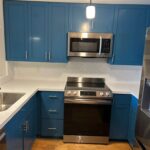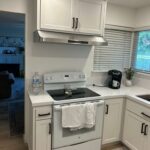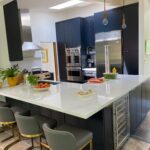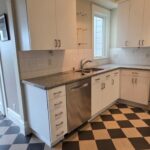

Every home tells a story—but some are missing the pieces that bring the narrative together.
In many cases, it’s not because something is physically missing.
The cabinets are there. The finishes are new. The space has been updated.
And yet, something still feels off.
Many homeowners only realize this after everything has already been installed—
when changing it becomes difficult and expensive.
This usually happens when a project is approached as a series of isolated decisions—
choosing a countertop here, a cabinet color there—without a clear intention connecting everything.
It’s especially common in kitchen and bathroom remodels, where the focus often stays on materials and colors alone.
And while those choices do matter, they are not what ultimately define the space.
What truly shapes a well-designed environment is the logic behind each decision—
how elements relate, how they balance one another, and how they come together to form a cohesive whole.
That’s the difference between a project that simply looks finished and one that feels balanced, cohesive, and harmonious.
A space that doesn’t just work—
but feels right the moment you walk into it.
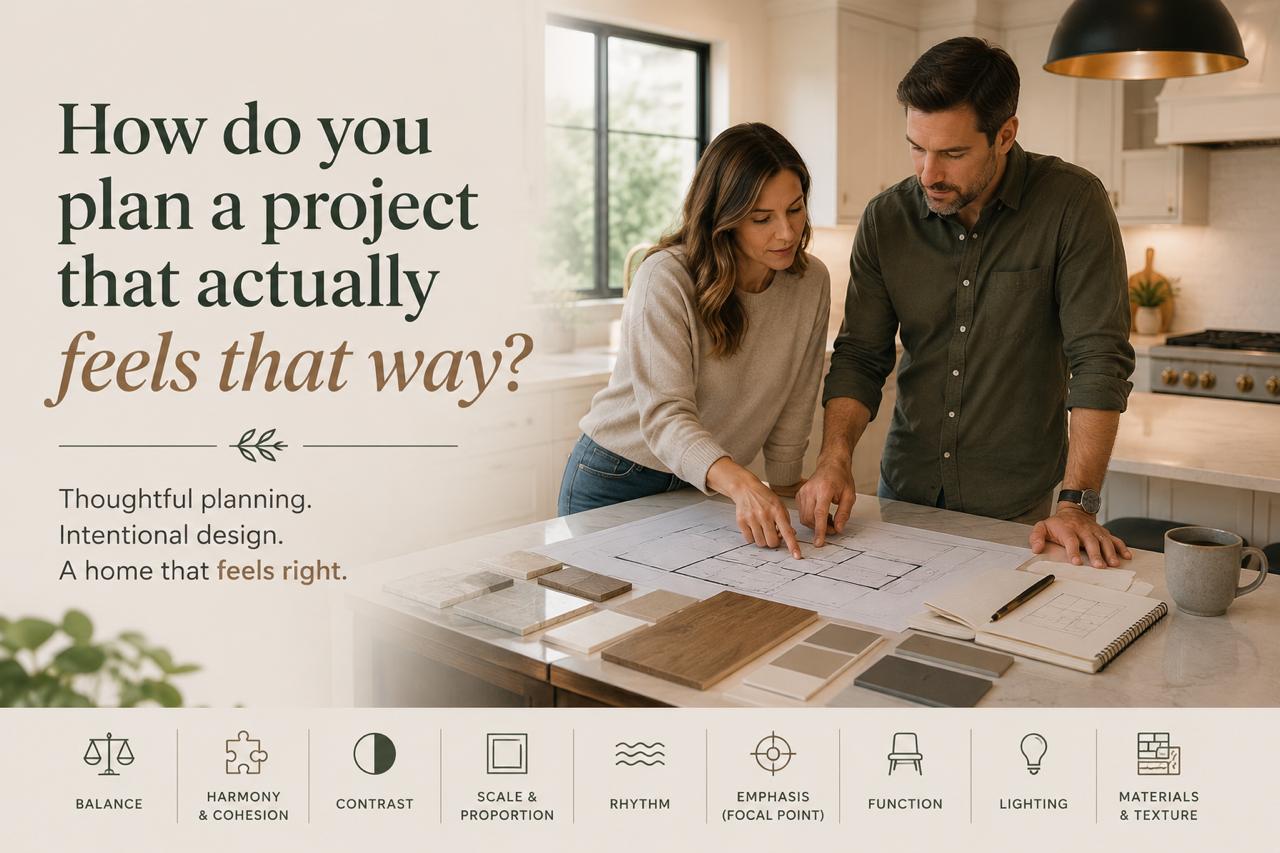
So how do you plan a project that actually feels that way?
It starts by understanding a few core design principles.
These are not trends—they are the foundation behind every well-designed space.
1. Balance
Balance is about how visual weight is distributed within a space.
In many kitchens, one side ends up overloaded with tall cabinets, appliances, or darker tones,
while the opposite side feels empty or disconnected.
Even when high-end materials are used, this imbalance can make the space feel slightly uncomfortable—
without people knowing exactly why.
A well-balanced design corrects this by redistributing elements
or introducing lighter features to offset the visual weight.
If you’ve ever felt like something in your space is “off” but couldn’t explain it, balance is often the reason.
2. Harmony & Cohesion
Harmony is what makes a space feel unified instead of pieced together.
It’s common to see kitchens that look beautiful on their own,
but don’t relate to the rest of the home—different tones, materials, or styles competing with each other.
The result is a space that feels disconnected rather than intentional.
A cohesive design ensures that colors, materials, and finishes work together,
creating a natural flow from one area to another.
This is often one of the first things we evaluate—because fixing it later is much harder.
3. Contrast
Contrast is what gives a space depth and definition.
Without it, everything can blend together—even when expensive materials are used.
A kitchen with similar tones, for example, may feel flat and lack character.
Introducing contrast—whether through light and dark elements, textures, or finishes—
creates visual interest and makes each feature stand out.
4. Scale & Proportion
Scale and proportion define how elements relate to the size of the space—and to each other.
A common issue is using features that don’t match the space—
oversized lighting in a small kitchen, or a mirror that feels too small for the vanity.
These mismatches disrupt the entire design,
even if everything else is well selected.
We recently worked with a client who had just installed a new vanity and mirror.
Everything was high quality—
but the mirror was undersized for the wall.
The space felt incomplete, even though nothing was technically “wrong.”
Once we corrected the proportions,
the entire bathroom felt more intentional—without replacing the main materials.
These are the kinds of details that are simple to adjust early—but costly to fix later.
5. Rhythm
Rhythm is how the eye naturally moves through a space.
When there is no repetition or consistency, a design can feel random or unstructured.
Mixing too many finishes or hardware styles, for example, can break the visual flow.
By repeating certain elements—such as colors, materials, or details—
a space feels more organized, intentional, and easier to experience.
6. Emphasis (Focal Point)
Every space benefits from a clear focal point.
Without it, the eye doesn’t know where to land,
and the space can feel scattered.
In kitchens, this is often the island or backsplash.
In bathrooms, the vanity wall.
A well-defined focal point
helps guide every other decision that follows.
7. Function
A space must work well—not just look good.
It’s not uncommon to see beautiful kitchens
that lack proper storage or layouts that don’t support daily use.
Over time, these issues become frustrating—
regardless of how the space looks.
A well-designed layout considers how the space is actually used,
ensuring that storage, movement, and accessibility support the homeowner’s routine.
This is where many of the most expensive mistakes happen—before construction even begins.
8. Lighting
Lighting plays a major role in how a space is experienced.
Relying on a single light source often leaves areas too dark or too harsh,
affecting both functionality and atmosphere.
Even a well-designed space can feel incomplete without proper lighting.
Layering ambient, task, and accent lighting
creates a more functional and comfortable environment.
9. Materials & Texture
Materials and texture are what give a space depth and a more refined, high-end feel.
Using only one type of finish or surface can make a space feel flat—
even when the materials themselves are high quality.
This is often why some remodels
don’t achieve the expected result.
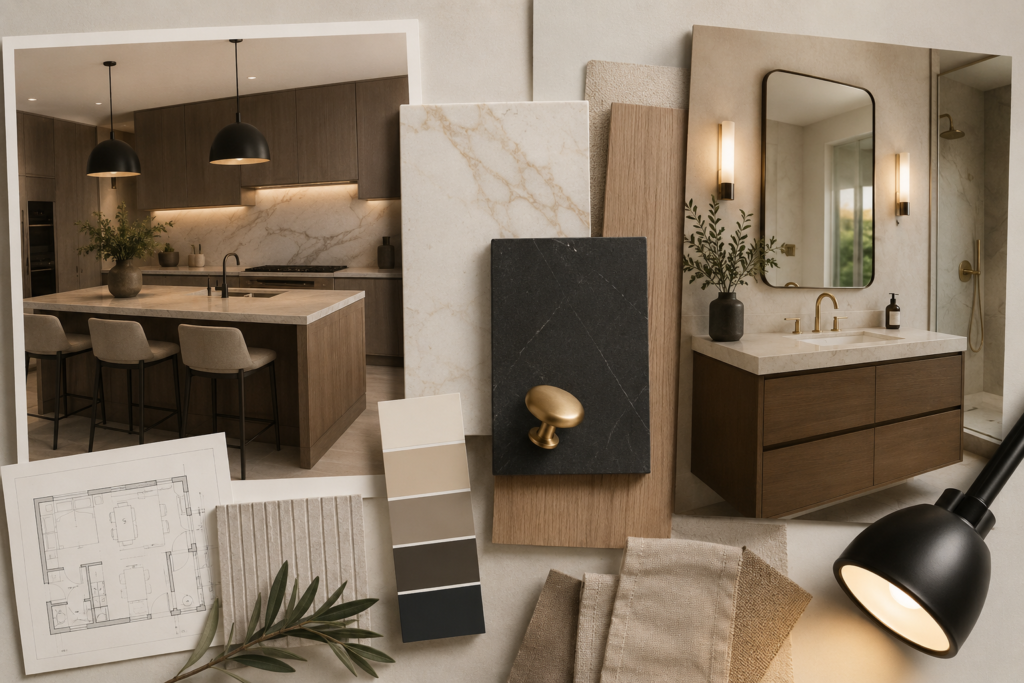
By combining different materials—such as wood, stone, and metal—
and varying textures, the space gains richness and a more elevated look.
Conclusion
Understanding these principles can feel overwhelming at first.
There are many decisions to make—and each one influences the final result.
But the difference isn’t just in choosing the right materials.
It’s in having a clear vision
and making sure every decision works together from the beginning.
A well-designed space is not about choosing the right materials—
it’s about making the right decisions in the right order.
Because most costly mistakes don’t happen during construction—
they happen in the planning stage.
At Adval, we approach each project with that in mind—from the initial design to the final build.
Every detail is considered, planned, and executed with intention,
so the result is not just completed—
but fully aligned with what was envisioned.
Ready to take the next step?
Schedule a consultation and we’ll walk through your space together—before any final decisions are made.